1. Product identity and units
Define SKUs, product variants, barcodes where required, units of measure and any batch or serial information the operation needs.
I build bespoke inventory management systems around your products, locations and stock movements, helping your team maintain reliable records and connect availability to the workflows that depend on it.
When stock updates are spread across spreadsheets, sales channels and disconnected tools, it can be difficult to know which quantities are accurate. I develop bespoke inventory management software around your products, stock movements and operational requirements.
I define how stock is received, reserved, transferred, adjusted and counted, then structure records and permissions around those tasks. Depending on your operation, the system can support multiple locations, product variants, reorder thresholds, batches, serial numbers and a traceable movement history.
Inventory software can also connect to ordering, fulfilment, purchasing, ecommerce, manufacturing and reporting workflows. This helps keep stock information aligned with the work that depends on it, provided the connected systems support the required integration and synchronisation rules.
An important part of the design is deciding how the system handles exceptions. Partial deliveries, returns, damaged products, stocktake discrepancies and failed updates all need clear rules so that the recorded quantity remains explainable.
If you already use spreadsheets or an older stock system, I can assess the existing product data and plan a controlled migration. The goal is to improve the reliability of stock information without introducing unnecessary complexity or replacing specialist tools that already work well.
Stock information becomes difficult to trust when receipts, sales, transfers and adjustments are recorded in different places. A spreadsheet might show one quantity while an order system or warehouse record shows another, leaving staff to investigate discrepancies before they can act.
I develop inventory management software around the way products move through your business. That can include receiving deliveries, tracking quantities across locations, reserving stock for orders, processing adjustments and recording stocktake results.
The aim is to give staff a consistent view of stock and make changes explainable. Rather than treating inventory as a single quantity, the system can record the transactions, rules and responsibilities behind that figure.
A bespoke inventory system can bring product records, stock movements and operational availability into one application, with functionality selected to match your business.
I define which system owns each stock record and how orders, purchasing, production or fulfilment reserve, consume and release quantities.
Reliable inventory software needs clear rules for product identity, stock transactions, availability and reconciliation, including what happens when records do not match.
Define SKUs, product variants, barcodes where required, units of measure and any batch or serial information the operation needs.
Record receipts, transfers, sales, returns, write-offs and manual adjustments as distinct types of movement.
Define the difference between physical stock, reserved stock and quantities available to promise or allocate.
Model warehouses, stores, vehicles or other stock-holding locations and define how transfers are processed.
Plan how physical counts are recorded, discrepancies investigated and approved adjustments applied.
Identify the systems that exchange stock information and establish how failed or conflicting updates are resolved.
The important details are how the system handles real stock movements, conflicting updates and discrepancies between recorded and physical quantities.
| Question to ask | A surface answer | A useful project answer |
|---|---|---|
| How are stock movements recorded? | Update the quantity when stock changes. | Record the movement type, quantity, source, destination, timestamp and relevant user or reference. |
| How are transfers between locations handled? | Reduce one location and increase another. | Define dispatch, in-transit status, receipt confirmation and handling for partial or missing deliveries. |
| What happens when a stock count differs? | Overwrite the recorded quantity. | Record the count, investigate discrepancies where necessary and apply an authorised adjustment with a reason. |
| How is stock reserved for orders? | Reduce stock when an order is placed. | Define when stock is reserved, released or deducted, including cancellations, failed payments and partial fulfilment. |
| How is availability shared with other systems? | Synchronise stock periodically. | Define the source of truth, update frequency, conflict handling and recovery from failed synchronisation. |
| How are low-stock items identified? | Display items below a threshold. | Set rules by product or location, account for reserved quantities and identify the items requiring action. |
| Can the system handle returns and damaged stock? | Add the returned items back into stock. | Distinguish sellable, damaged, quarantined and written-off stock according to the business rules. |
| How will existing stock data be migrated? | Import the current spreadsheet. | Map product identifiers and locations, validate quantities, resolve duplicates and reconcile opening balances. |
A spreadsheet can remain suitable for a small operation with straightforward stock requirements. Moving to a dedicated system makes more sense when several people or locations depend on the same information, stock movements need to be traceable or availability affects orders and fulfilment.
Before building a custom solution, I would also consider whether an established inventory product already meets your needs. Existing software may provide useful warehouse, purchasing, barcode or accounting features that would be expensive to recreate.
Bespoke development is worth considering when the standard options do not fit your processes, when inventory needs to connect closely to your own applications or when the stock rules are specific to your operation. The scope can focus on the missing functionality rather than replacing every existing system.
Inventory software should reflect how products move through your business, including transfers, returns, reservations and adjustments that cannot be represented reliably by a simple in-or-out count.
I can help define the stock records, movement rules, permissions and integrations your application needs. Where inventory information already exists in spreadsheets or another system, I can also plan how opening quantities are migrated, checked and reconciled.
My work includes an operational delivery platform that uses inventory information alongside wider delivery and business workflows. The precise scope of any new inventory system would depend on your products, locations, transaction volumes and the systems you need to connect.
You do not need a complete technical specification. I can map out how stock is received, stored, reserved, transferred and counted, then define a practical software scope around your products, locations and existing systems.
I start by understanding the work the system needs to support. I keep decisions clear as the project moves from initial planning into development and launch.
I map the users, information, hand-offs and problems the software needs to solve.
I define the core features, data, integrations and a realistic first release with you.
I develop and test the application, then review it against real tasks and your feedback.
I help get the system live and plan sensible improvements as your requirements evolve.
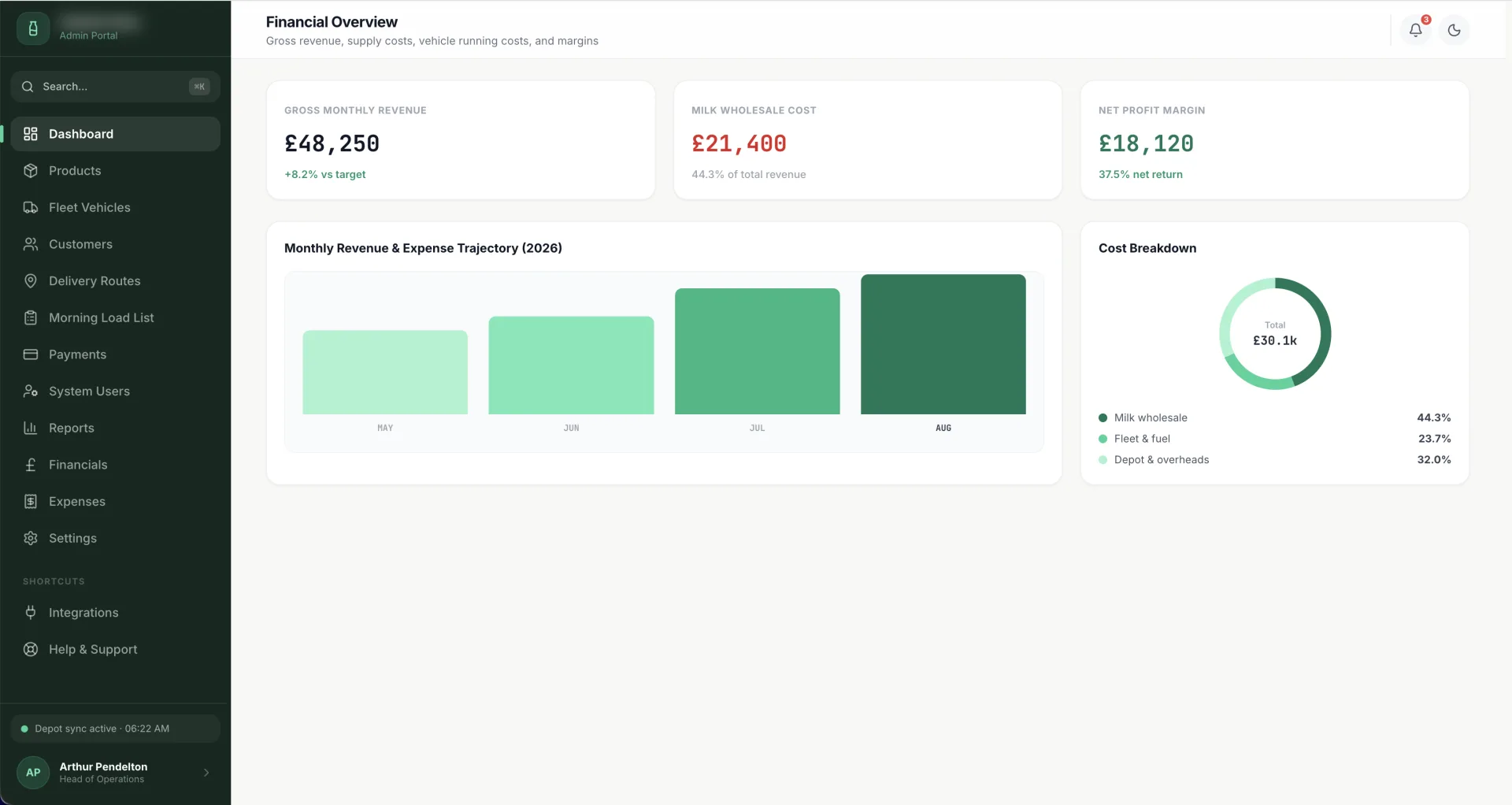
An operational platform combining delivery management with inventory information and wider business processes.
Answers to common questions about custom inventory systems, stock control and connected operational workflows.
Verified client reviews on PeoplePerHour. Let’s make your project the next one.