1. Availability and capacity
Define booking slots, service periods, seating or resource capacity and the rules for changing availability.
I build bespoke hospitality software that connects guest services, restaurant ordering, bookings and staff workflows around the way your business operates.
I develop bespoke hospitality software for businesses that need better ways to manage bookings, restaurant ordering, customer communication, staff workflows and operational reporting.
Hospitality operations can involve several connected processes, from taking an order or reservation to coordinating staff, managing service availability and keeping customers informed. I can develop software around these workflows when existing tools do not fit the way your business operates.
For restaurant businesses, this can include online or on-site ordering, Android kiosks, menu and pricing management, order-status controls and a connected back office. For other hospitality operations, the scope might focus on a particular booking process, customer-facing application, internal workflow or integration with existing platforms.
I have experience building restaurant ordering and kiosk systems with supporting back-office functionality. Other hospitality requirements need to be assessed individually, including the features of any existing hotel, reservation, payment or venue-management platforms you want to retain.
I do not assume that one custom application should replace every specialist tool. I start by identifying the operational problem, which records need to be connected and what the staff and customers actually need to do. From there, I can define a focused first phase and a sensible path for future development.
Hospitality businesses manage time-sensitive operations where bookings, customer requests, orders, staff responsibilities and service availability need to stay in sync. When information is spread across disconnected systems, staff can end up repeating tasks, correcting mistakes and chasing updates during busy periods.
I develop bespoke software to connect the processes that matter to your business. Depending on the requirements, this could mean a restaurant ordering platform, an on-site ordering kiosk, a back-office application or a system that connects customer-facing services with internal operations.
Different hospitality businesses have different needs. Restaurant ordering, hotel reservations and venue management are not interchangeable problems, so I start with the specific service you provide rather than assuming one generic platform will suit every operation.
I can develop the customer-facing application, internal controls and supporting workflows needed to manage a hospitality service, with features selected around your operating model.
I define which system owns each record and how information should move between applications, payment providers, devices and other third-party services.
A useful hospitality application needs to account for the exceptions that occur during real service, not just the ideal customer journey.
Define booking slots, service periods, seating or resource capacity and the rules for changing availability.
Specify how products, prices, modifiers, availability and customer selections are managed.
Map order submission, preparation, fulfilment, cancellation and completion, including which staff or stations handle each stage.
Define which team receives each request, who can change its status and when another person needs to take action.
Decide which events trigger confirmations, progress updates, changes or follow-up messages.
Identify existing payment, booking, accounting or operational platforms and the information that needs to be shared.
The important details are often the rules governing availability, changes, payments and staff hand-offs when something does not go to plan.
| Question to ask | A surface answer | A useful project answer |
|---|---|---|
| How are bookings or orders updated? | Staff can edit the record. | Define permissions, status transitions, capacity rules and customer notifications. |
| What happens when an item or service is unavailable? | Remove it from the menu or list. | Update availability consistently and define how affected bookings or active orders are handled. |
| How does information reach the right staff? | Display it on a dashboard. | Route requests to the appropriate team, station or user and track outstanding actions. |
| How are payments and order status connected? | Accept payment online. | Define payment confirmation, failed transactions, refunds, cancellations and order reconciliation. |
| Can the business manage multiple devices or locations? | Allow several users to sign in. | Define location-specific settings, device configuration, permissions and central management. |
| How are busy periods and service delays handled? | Staff update the estimated time. | Define how capacity, queue status, delayed orders and customer updates are coordinated. |
| Can the application connect to existing platforms? | Keep the current tools in place. | Verify available APIs, data ownership, synchronisation rules and failure handling. |
| What reporting does management need? | Show sales and booking totals. | Agree definitions for operational performance, outstanding work and the reports that support decisions. |
An established hospitality platform may be the better choice if it already covers your booking, ordering, payment or venue-management requirements. Specialist products can provide mature features that would be expensive to reproduce.
Bespoke development is worth considering when your operation has specific workflows, needs a custom customer-facing experience or relies on information moving between several systems. I can help identify which parts genuinely need custom development and which are better left to existing specialist tools.
The goal is to solve the operational problem without introducing unnecessary complexity. That might mean building a complete application, adding a focused back-office tool or connecting systems that already do their individual jobs well.
Bespoke hospitality software can be useful when standard platforms do not support your ordering process, device requirements, staff hand-offs or the way customer-facing and internal systems need to work together.
My relevant experience includes restaurant ordering, Android kiosks and connected back-office workflows. I can use that experience to help scope similar operational requirements while assessing other hospitality projects on their own merits.
I can start with a focused first phase, establish the essential workflows and plan further functionality around actual business needs. The scope should account for your users, service model, existing platforms and the practical conditions in which the software will be used.
You do not need a complete technical specification. I can map out how your venue handles bookings, orders, customer communication and staff tasks, then define a practical software scope around your actual requirements.
I start by understanding the work the system needs to support. I keep decisions clear as the project moves from initial planning into development and launch.
I map the users, information, hand-offs and problems the software needs to solve.
I define the core features, data, integrations and a realistic first release with you.
I develop and test the application, then review it against real tasks and your feedback.
I help get the system live and plan sensible improvements as your requirements evolve.
I have developed restaurant ordering software with Android kiosks and connected back-office tools for managing menus, pricing, devices, orders and kitchen workflows.
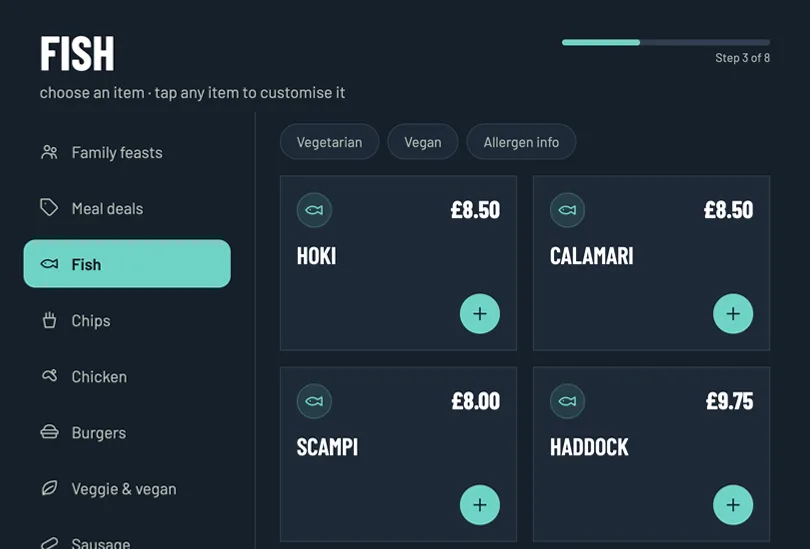
An intuitive self-service ordering and loyalty kiosk for Ocean Fry, integrated with a centralized Laravel back-office system.
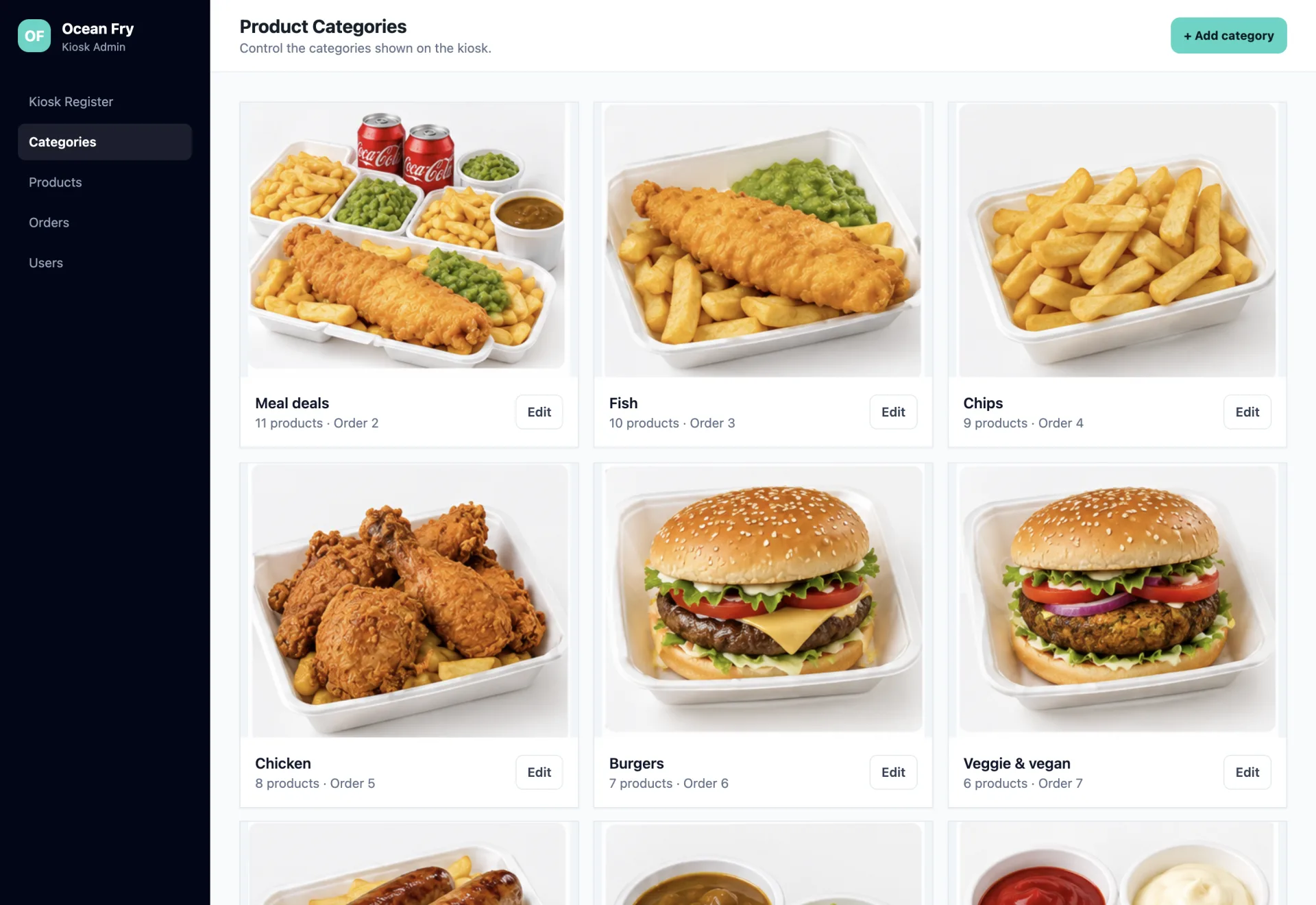
Streamlined restaurant operations and kiosk configuration through a centralized Laravel back office connected to floor-deployed Android ordering terminals.
Answers to common questions about bespoke hospitality software, restaurant ordering, bookings and connected venue operations.
Verified client reviews on PeoplePerHour. Let’s make your project the next one.