1. Account creation and access
Define how customers are invited, verified, authenticated and removed when access is no longer appropriate.
I build bespoke customer and client portals that give users secure access to account information, documents, updates and services, connected to the systems your business already uses.
Give customers a dedicated place to access account information, exchange documents, track progress and complete useful tasks without relying on repeated emails or phone calls.
A bespoke customer portal can bring the information and services your customers need into one organised online area. Depending on your business, that might include account details, project progress, order status, documents, invoices, service requests or booking information.
I build portals around the customer journey and the way your business operates. That includes planning account access, record-level permissions, document handling, notifications and the internal processes needed to manage customer activity. Customers should be able to complete appropriate tasks themselves while staff retain control of reviews, approvals and sensitive decisions.
A portal can also connect to an existing CRM or operational system, helping keep customer-facing information aligned with the records your business already maintains. The available integration options, data ownership and behaviour when a synchronisation fails all need to be considered during planning.
Not every business needs a large standalone platform. I can help identify the most useful initial features, establish a realistic scope and plan how the portal can evolve as customer needs and business processes change.
When customers rely on emails, phone calls and shared documents to get information, routine requests can take up valuable staff time. A customer portal can give them a more direct way to find updates, access records and complete common tasks.
I develop client portals around the service you provide and the information customers actually need. Depending on the requirements, that could mean viewing project progress, downloading documents, submitting requests, managing bookings or checking order and account information.
The portal needs to do more than provide a login screen. Information must be relevant and up to date, customers must only access records they are authorised to see, and actions need to fit the way your business handles work behind the scenes.
A bespoke customer portal can bring account information, documents, service workflows and business-system data together in one accessible interface. I shape the features around the needs of your customers and the processes your staff need to manage.
I define which information customers can see and which actions they can take, including the points where staff approval or an internal workflow is required.
The most important portal decisions often sit behind the interface. Before adding features, I consider who can access each record, where the information comes from and what should happen when a customer submits a request or changes their details.
Define how customers are invited, verified, authenticated and removed when access is no longer appropriate.
Establish whether accounts belong to individuals, businesses or groups, and how authorised users access shared information.
Plan secure file storage, access checks, upload validation, document history and any retention requirements.
Define how submissions are validated, assigned, reviewed and moved through your business process.
Identify which system owns each record, how changes are synchronised and how failures are handled.
Decide which events trigger customer notifications and how the portal will be monitored and maintained after launch.
A good portal needs clear access rules, dependable information and workflows that match your service. These are useful questions to resolve during planning.
| Question to ask | A surface answer | A useful project answer |
|---|---|---|
| How are customer accounts verified? | Customers create passwords. | Define account invitations or registration, identity checks where needed, recovery and account removal. |
| How is private information protected? | Customers must log in. | Enforce record-level permissions and test access boundaries between individuals and organisations. |
| How are documents shared securely? | Staff upload files. | Control file access, validate uploads and define document history and retention requirements. |
| Where does customer information come from? | Connect the CRM. | Identify data ownership, field mapping, synchronisation rules and integration failure handling. |
| What happens when a customer submits a request? | The business receives an email. | Define validation, assignment, staff review, status tracking and customer notifications. |
| Can staff manage the portal? | An administrator can edit records. | Provide appropriate internal tools, permissions and visibility of customer activity. |
| How will the portal be maintained? | Fix issues when they arise. | Plan updates, backups, monitoring, security fixes and ongoing changes to integrations. |
An existing platform may already provide everything your customers need. For a simple account area, using the features you already have can be the most practical choice.
Bespoke customer portal development becomes more useful when the customer journey crosses multiple systems, requires specialist permissions or depends on workflows that existing software cannot handle well. I assess the requirements before recommending a custom build.
A customer portal can be useful when clients need regular access to information, documents or actions that currently require staff involvement. The value comes from making those tasks easier without losing control over sensitive information or important decisions.
I can help map the customer journey, identify the required data and integrations, and separate the essential launch features from future improvements. Depending on the project, the portal could connect to an existing CRM, form part of a wider business application or operate as a standalone service.
As the developer working directly on the project, I can discuss the technical approach, practical limitations and likely development scope with you rather than passing requirements between separate sales and development teams.
You do not need a complete technical specification. I can help map out how customers currently interact with your business, identify the tasks a portal could handle and define a practical scope for development.
I start by understanding the work the system needs to support. I keep decisions clear as the project moves from initial planning into development and launch.
I map the users, information, hand-offs and problems the software needs to solve.
I define the core features, data, integrations and a realistic first release with you.
I develop and test the application, then review it against real tasks and your feedback.
I help get the system live and plan sensible improvements as your requirements evolve.
Examples of software that connects users with business information, records and operational workflows.
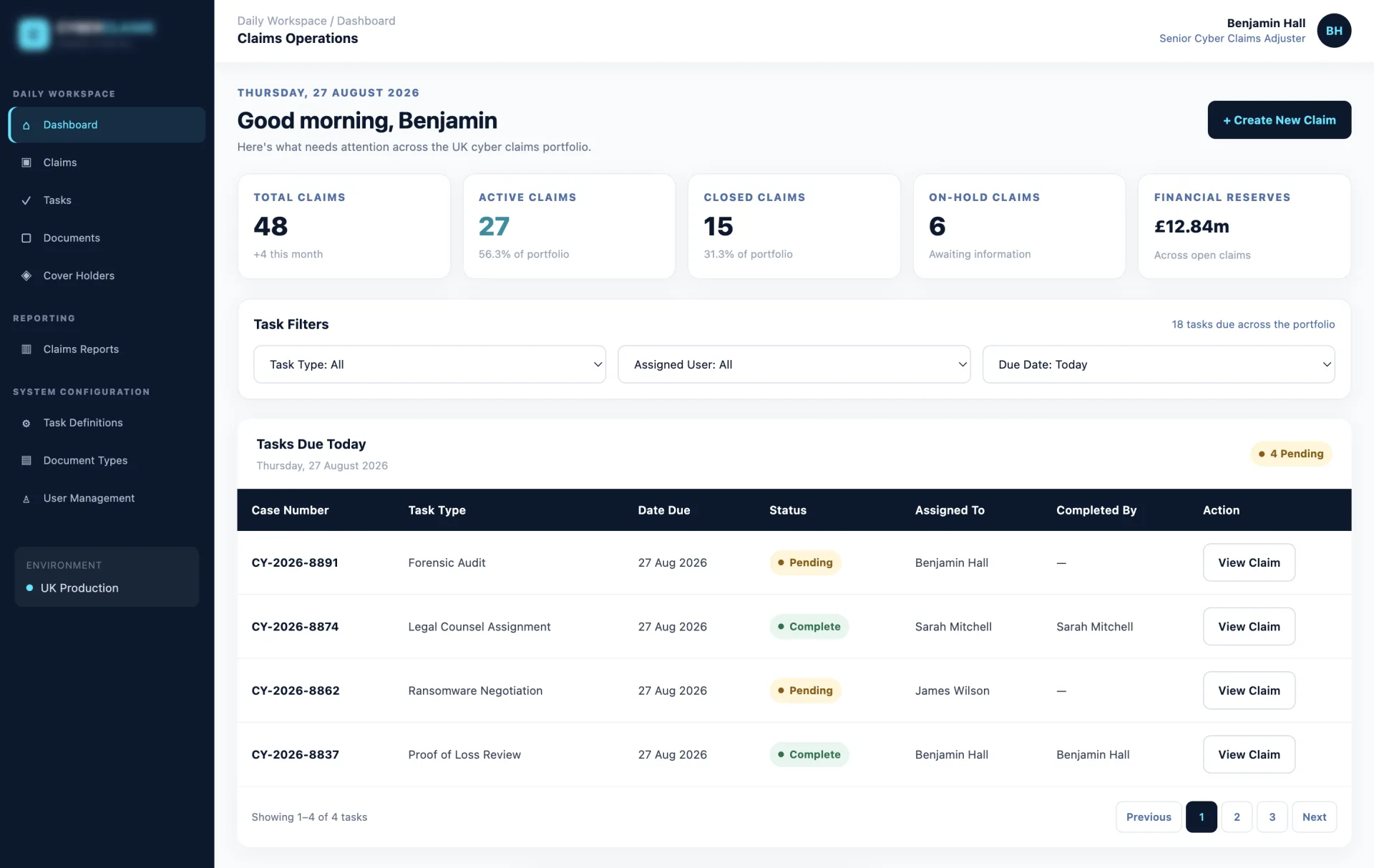
A custom-built Laravel and Livewire management system designed for specialist claims adjusters to monitor complex cyber incidents and track live financial reserves.
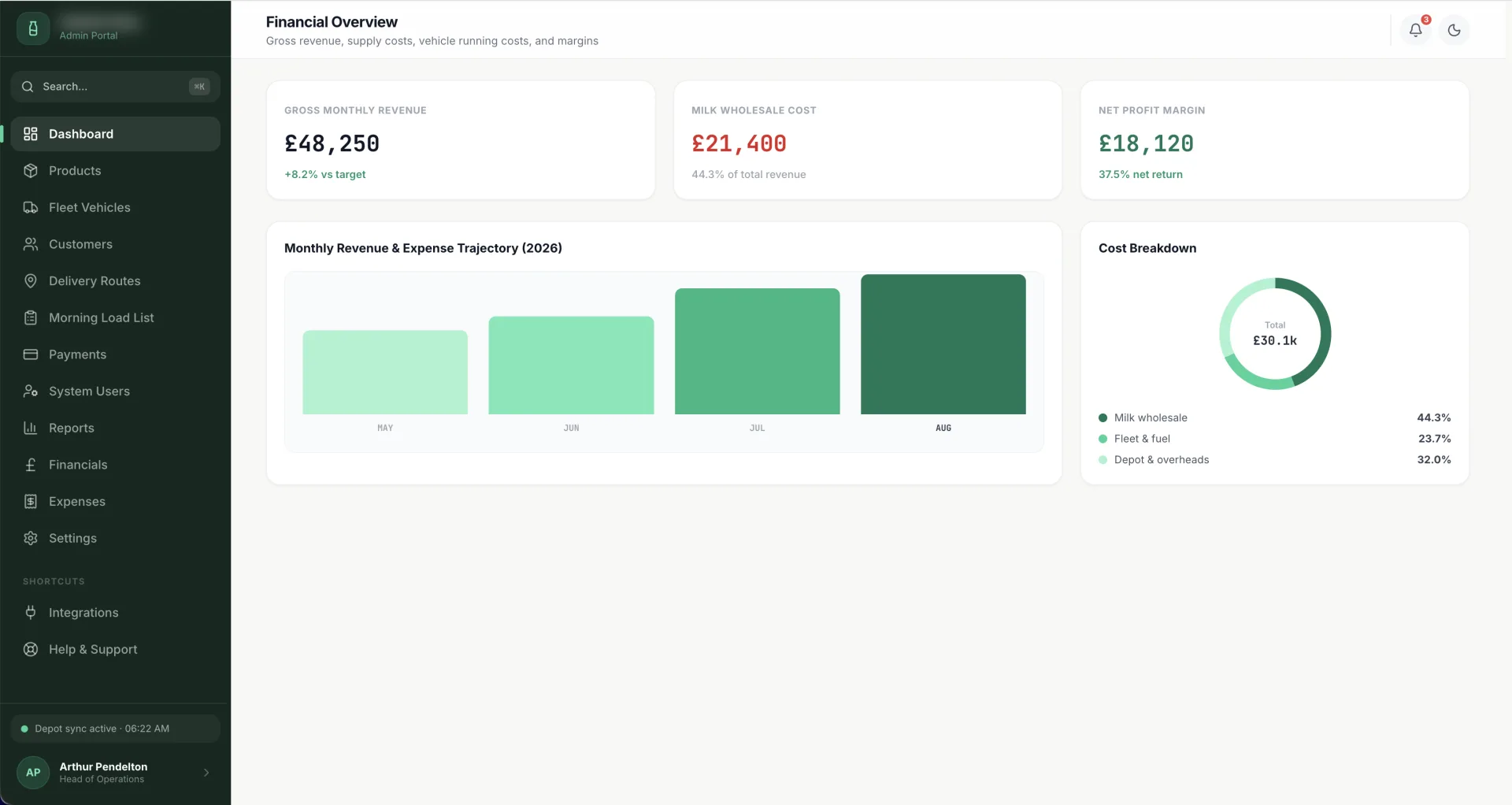
A high-performance operational portal designed for local dairies to streamline morning route planning, vehicle compliance, inventory margins, GoCardless payments, and Twilio customer SMS notifications.
Common questions about planning and developing secure customer and client portals.
Verified client reviews on PeoplePerHour. Let’s make your project the next one.